

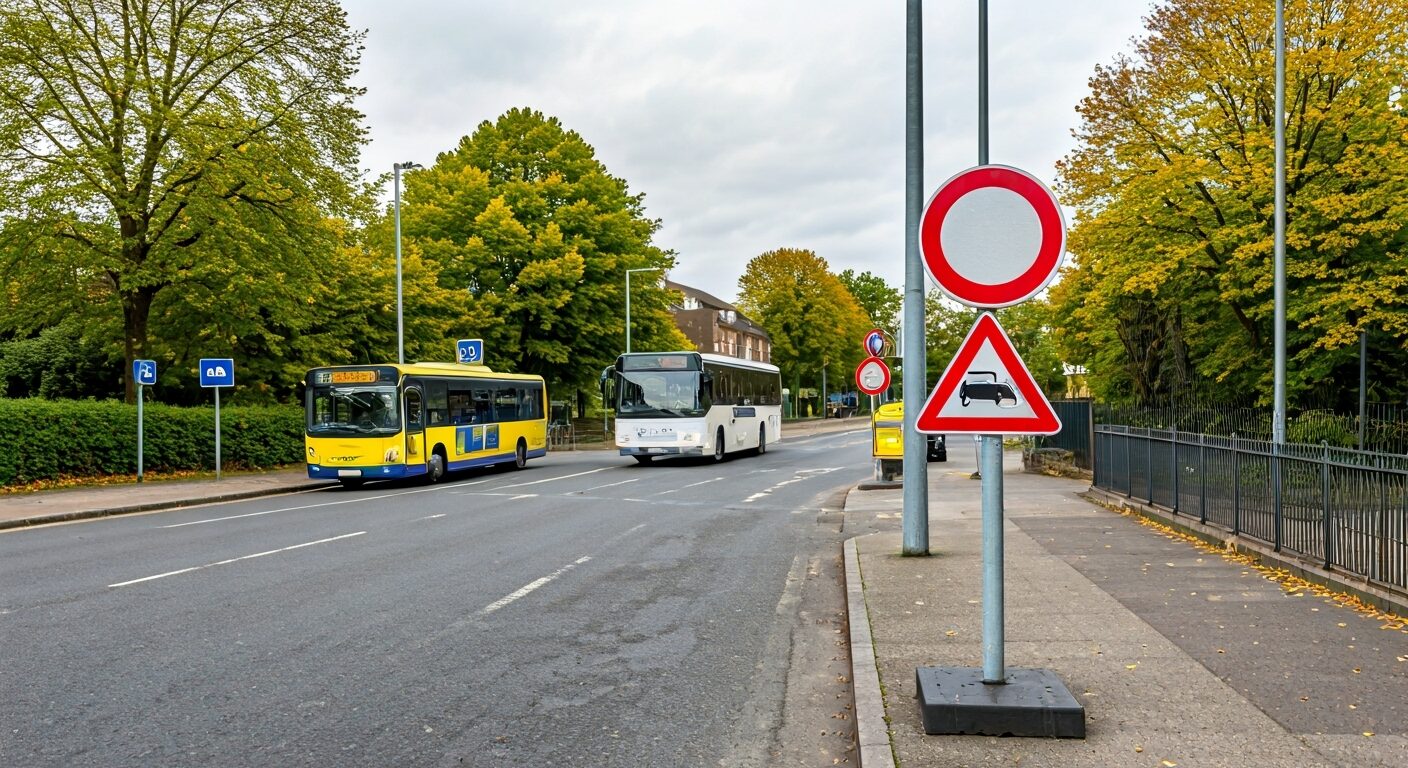
No-entry signs perform an important function in traffic management on Polish roads. Their variety and specific features are crucial for the safety of both drivers and pedestrians. We will look at the meaning and use of these signs, focusing in particular on the sign B-2. We will discuss the materials used in their manufacture, the method of construction and additional plates. You will learn how to correctly interpret and install no-entry signs, which is essential for maintaining order and safety on the roads.
No-entry signs on Polish roads
No-entry signsThe traffic lights that we encounter on Polish roads play an important role in traffic organisation. They inform drivers of places that are off-limits to vehicles, which is crucial to maintaining order and ensuring safety. They can be seen at entrances to restricted areas and where traffic restrictions apply.
For example, the B-1 sign, designed in accordance with the guidelines of the Minister of Infrastructure, is a universal symbol that can be understood by different road users. The bans apply not only to trucks, but also to motorbikes and buses, helping to reduce accidents and improve traffic flow.
No-entry signs are an important part of the road signage system. They serve as clear messages to drivers, helping to avoid dangerous situations. They make it easy to identify areas inaccessible to vehicle traffic, which improves traffic management in cities and congested areas.
Meaning and application of no-entry signs
No-entry signs perform an important function in regulating traffic on roads. They limit the access of vehicles to specific areas, resulting in greater safety and order. They can be used in a variety of ways; for example, they may apply only to lorries or motorbikes. They create clear boundaries for traffic, which helps avoid collisions and improves traffic flow. What is more, in accordance with the regulations of the Ministry of Infrastructure, they are a key element of road markings, which allows for effective traffic management in cities.
Variety and specificity of no-entry signs
No-entry signs are characterised by a wide variety, allowing them to be adapted to specific traffic requirements. Each sign indicates precisely which vehicles are prohibited from travelling on a particular route.
- Some of them prohibit entry only for trucks,
- others may involve motorcyclists,
- still others car drivers.
Such differentiation is key to effectively regulating traffic and ensuring road safety. All signs must comply with the guidelines of the Ministry of Infrastructure, ensuring that they are legible and understandable to all traffic participants. This makes it easy for drivers to identify roads they are not allowed on, which contributes to a reduction in accidents and better traffic management.
Specification and installation of sign B-2
The B-2 sign plays an important role in the road marking system, prohibiting the entry of vehicles from the side where it was placed. In this way, it contributes to road safety and order. To be effective in its function, it must be installed correctly and be clearly visible to all road users.
The B-2 sign is distinguished by specific dimensions, colours and symbolism in accordance with the guidelines of the Minister of Infrastructure. It most often takes the form of a circle with a white background and red border, on which the symbol of a crossed-out vehicle is displayed. In situations where entry is only permitted for selected vehicles, additional plates are used to specify the exact traffic rules.
For a B-2 sign to fulfil its purpose, it must be placed at the correct heightThis ensures that it is clearly visible and comprehensible. This makes it easy for drivers to see, reducing the risk of accidentally breaking the ban. In addition, the signs should be made of materials resistant to changing weather conditions, which guarantees their durability and legibility over a long period of time.
The correct specification and installation of a B-2 sign is key to effective traffic management and ensuring road safety, especially in high-traffic areas or restricted zones.
Materials and construction of sign B-2
Sign B-2 manufactured in robust galvanised sheet metal, which makes it resistant to adverse weather conditions. The material meets all standards for traffic signs, ensuring their longevity and usability. In addition, the reflective film coating significantly increases its visibility at any time of day or night.
Every B-2 sign must be marked with CE and a national technical assessment, which confirms its compliance with safety standards. As a result, the sign is not only characterised by its robustness, but also effectively supports traffic organisation, thereby improving road safety.
Supplementary plates for sign B-2
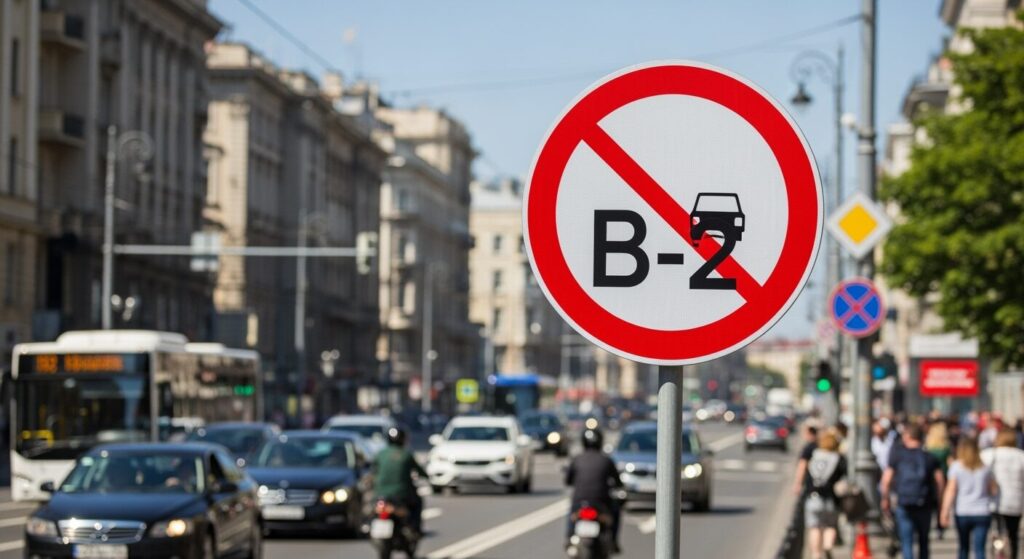
Supplementary plates for the B-2 sign are crucial in traffic management.
They accurately indicate which vehicles can enter areas where access is normally prohibited. They are invaluable in areas where access is restricted to only selected vehicles, such as buses or emergency vehicles. The information on these placards must comply with national regulations and standards, ensuring that they are effective and understandable to drivers. As a result, traffic can be better managed and road safety is improved.
See other road signs in the secure.co.uk shop